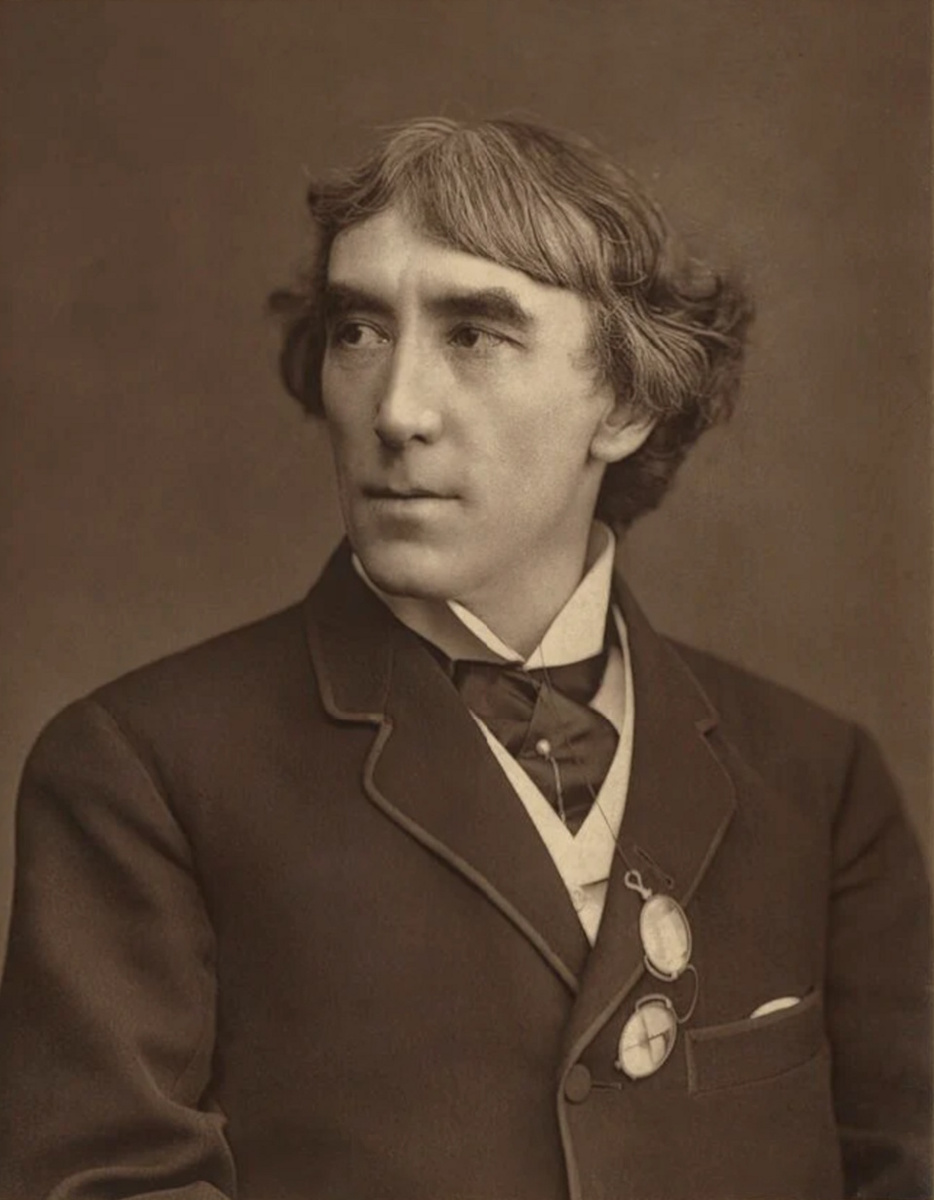
Sir Henry Irving, the London legend who launched Edinburgh's Lyceum Theatre in 1883
116 days ago
Published May 21st 2026
Edinburgh’s Lyceum Theatre celebrates its 60th season as a civic theatre this summer with events culminating in the innovative ‘Lyceum at Home’ initiative in mid-June. Four new plays have been commissioned from leading Scottish writers, to be performed in people’s homes before being presented as a quadruple bill from June 18th - 20th, which promises to be very special.
But the history of this wonderful theatre goes back much further than 60 years. It was built and opened as a brand-new state-of-the-art theatre for Edinburgh’s enthusiastic theatre-goers in 1883, launched by a performance from the most prestigious theatrical company in Britain at the time: Henry Irving’s London Lyceum company.
My second novel, based on true events, is set in the world of Edinburgh’s 19th century theatres, opening with the final performance at the Theatre Royal before its demolition in 1859 and culminating at the glorious 1883 grand opening of Edinburgh’s Royal Lyceum Theatre. The story of Henry Irving’s strong connection with Edinburgh that brought about this glorious event is woven throughout my novel, Disappearing Acts: The Real Mackay’s Granddaughter, which has its own Edinburgh launch during the same week as the Lyceum’s special bill - on June 17th.
The answer, I believe, lies in Irving’s deep, personal connection with Edinburgh, a story of friendship, kindness and perseverance that is not widely known. Once he’d accepted the invitation to come north on his way to America, Irving transformed the 1883 Lyceum engagement into a triumphant tour of the north of England and Scotland, garnering enormous press coverage as though he and Terry were royalty. It’s interesting to note, also, that Irving’s business manager at the time was Bram Stoker, before his own literary success had taken place.
This new Royal Lyceum theatre in Edinburgh was the dream of two young men, one of whom was the son of Henry Irving’s mentor, Robert Wyndham. Wyndham had been manager of Edinburgh’s Queen’s Theatre and Theatre Royal when an awkward young man with a burning ambition for the stage, John Brodribb, arrived in 1857 in search of work. Seeing his potential, he helped him overcome a terrible stammer, brought on by trauma as a child, giving him hundreds of acting roles for over two and a half years and building his confidence enormously. Irving never forgot this unstinting support, regarding Robert Wyndham as his mentor. They remained friends throughout their lives.
Meanwhile, Wyndham’s son, Frederick - who almost died in a theatre fire when he was a few days old and thus had the middle name, Phoenix - had become a successful young actor himself by the 1880s, and wanted to move into management, like his father.
Henry Irving, was hugely successful by this time and came on board financially at the outset, agreeing to further support his mentor’s son by bringing his company to Edinburgh and putting on a sensational production of Much Ado About Nothing with himself and Ellen Terry in starring roles.
In his speech after this performance, which was put on only a matter of days after the theatre was completed, Irving fondly referred to his early career in Edinburgh, drawing a parallel with his performance in the final production at the Theatre Royal in 1859, shortly before it was demolished.
After this auspicious opening night, Howard and Wyndham grew their business quickly and eventually became, effectively, the inventors of panto as we know it these days. In 1888 they took over ownership, production and management of the Theatre Royal in Glasgow, adding to the three other Scottish theatres they already successfully managed, and their theatrical company went on to become the largest of its kind in Britain, continuing well into the 20th century. Although Howard died shortly after the incorporation of Howard and Wyndham Ltd in 1895, the firm retained his name and continued under Wyndham’s leadership until his retirement in 1928.
The lives of Henry Irving and the Wyndham family are woven throughout my novel, Disappearing Acts: The Real Mackay’s Granddaughter, based on the life of my 2nd cousin 4 times removed. Lottie had lived in a magical world of stories under the shelter of her beloved grandfather, a famous comic actor, for as long as she could remember - but when he died she was stranded in a houseful of cousins, her strict Victorian uncle only noticing her when she stepped out of line. Using her imagination, she began to navigate the real world on her own terms, lurching from one idea to the next, taking risks and keeping secrets, determined no one would stop her pursuing her theatrical dreams.
Disappearing Acts: The Real Mackay’s Granddaughter
by Helen Graham
Published May 28th 2026 by Troubador Publishing
Available from all good book shops and online in all the usual places